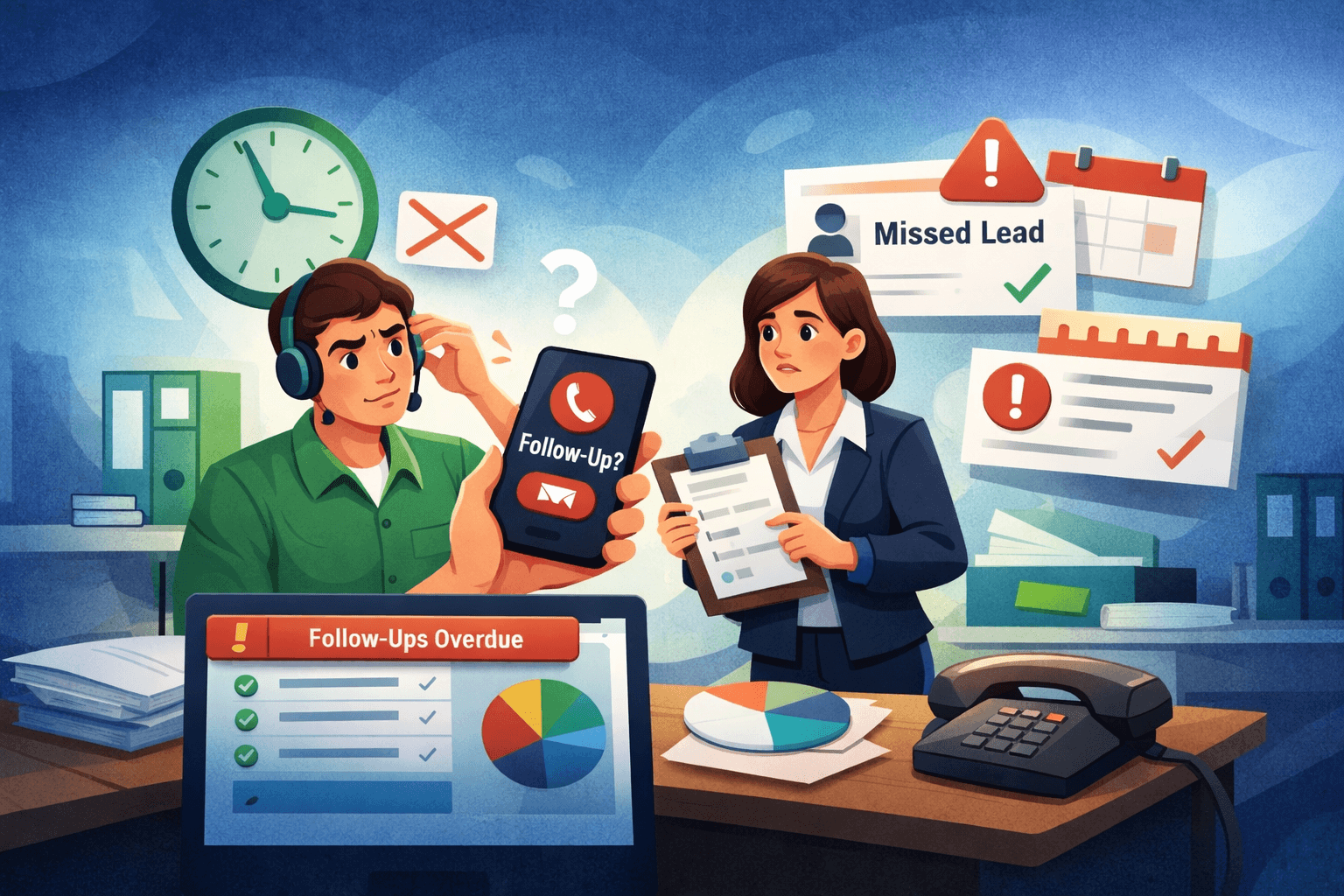

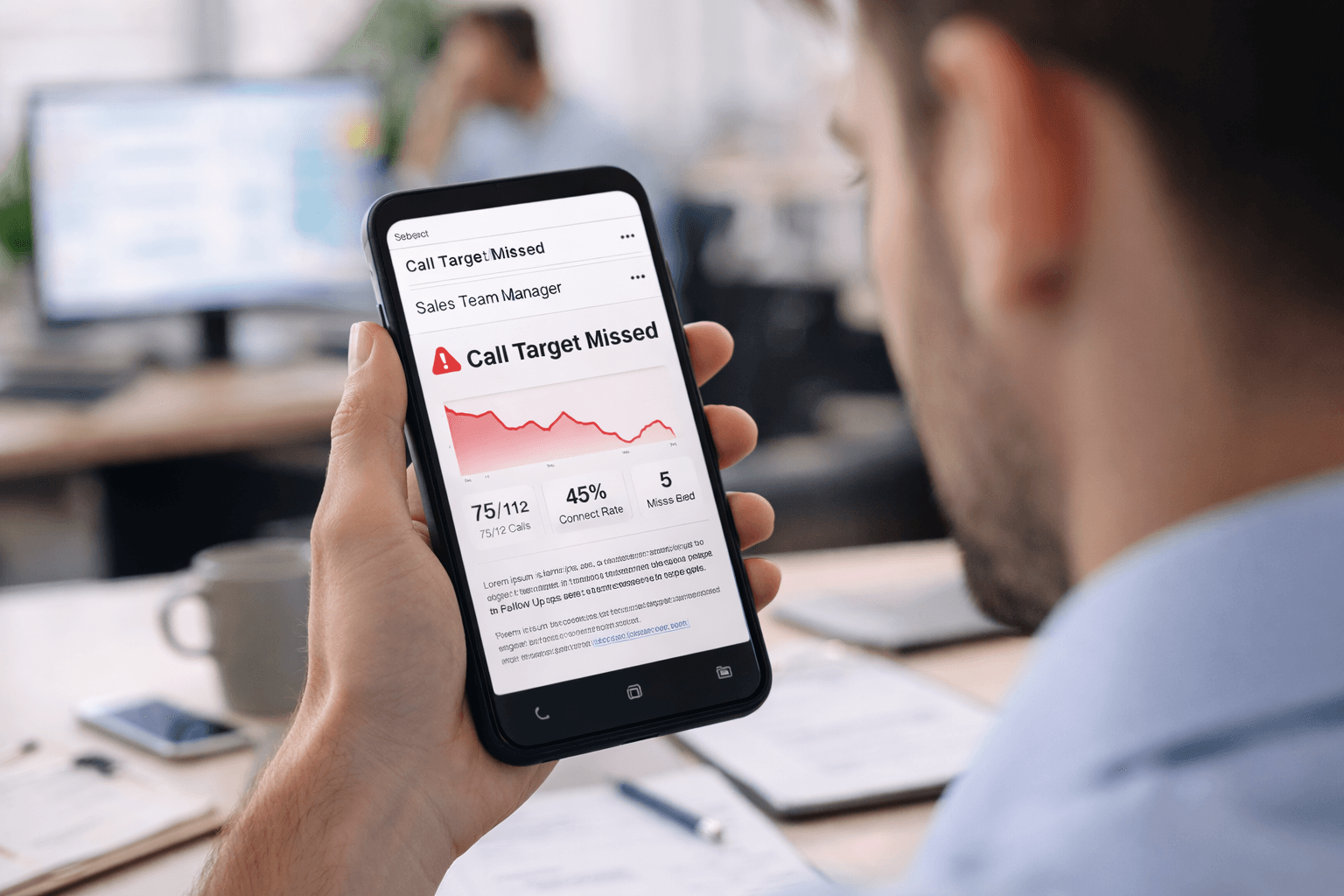
If your sales dashboard shows missed call targets week after week, you’re not alone. Many sales leaders assume the issue is effort—“my reps aren’t making enough calls”. But in reality, call targets are rarely missed because of motivation alone.
More often, the problem lies in process gaps, outdated calling methods, and poor visibility into daily sales activity.
We’ll break down the real reasons sales teams struggle to hit call targets—and what modern sales teams are doing differently to fix it. If you manage inside sales, telesales, or field sales teams, this will help you diagnose the issue clearly and take practical next steps.

The Hidden Cost of Missed Call Targets
Call targets aren’t just vanity metrics. They directly affect:
- Lead coverage and response time
- Pipeline creation
- Conversion rates
- Revenue predictability
When call targets slip, follow-ups get delayed, hot leads go cold, and managers lose confidence in forecasts. The danger is that teams often treat symptoms instead of fixing root causes.
Let’s look at the most common reasons your sales team isn’t hitting call targets.
1. Manual Dialing Is Slowing Reps Down
One of the biggest productivity killers in sales calling is manual dialing.
In many teams, reps still:
- Copy-paste numbers from spreadsheets
- Dial each lead individually
- Switch between phone apps and CRMs
- Log calls manually after every conversation
Each of these steps may take only a few seconds—but multiplied across hundreds of calls, they eat up hours every day.
Why This Impacts Call Targets
- Reps spend more time preparing calls than making them
- Fewer conversations per hour
- Fatigue sets in faster
- Targets feel unrealistic, even when they aren’t
Best practice: Sales teams using auto or click-to-call dialers eliminate these micro-delays and significantly increase daily call volume without increasing working hours.

2. Reps Are Wasting Time on Low-Quality Leads
Another silent blocker: poor lead prioritization.
When sales reps don’t know:
- Which leads are new
- Which leads need follow-ups
- Which leads are already contacted
- Which leads are high-intent
They end up calling randomly—or worse, repeatedly calling the wrong leads.
Common Symptoms
- Duplicate calls to the same contact
- Missed follow-ups on interested prospects
- Reps arguing over lead ownership
- Inflated dialing effort with low results
Why This Hurts Call Targets
Time spent on the wrong leads reduces:
- Calls per hour
- Connect rates
- Motivation
Modern CRMs help teams organize leads, assign them clearly, and surface the right calls at the right time—so every dial actually counts.
3. Switching Between Too Many Tools
Ask your reps how many tools they use daily, and you’ll hear things like:
- One app for calling
- One CRM for lead data
- WhatsApp for follow-ups
- Notes app for reminders
- Spreadsheets for tracking
This constant context-switching creates friction.
The Real Impact
- Slower call handling
- Missed activity logs
- Incomplete data
- Lower call throughput
Sales teams using mobile CRMs with built-in calling reduce tool hopping, making it easier to stay focused and consistent throughout the day.
4. Lack of Real-Time Visibility for Managers
Many managers only discover missed call targets at the end of the day or week—when it’s too late to fix anything.
Without real-time insights, you can’t answer questions like:
- Who is actively calling right now?
- Which reps are stuck or idle?
- Are follow-ups happening on time?
- Is the target realistic based on actual talk time?
Why This Matters
When reps know activity isn’t visible:
- Accountability drops
- Call pacing becomes inconsistent
- Targets feel optional rather than operational
Modern sales calling systems provide live dashboards, call logs, and outcome tracking so managers can course-correct early—not after results are missed.
5. Call Targets Aren’t Aligned With Reality
Sometimes the issue isn’t execution—it’s expectation.
Many sales teams set call targets without considering:
- Average talk time
- Connect rates
- Call disposition types
- Breaks, meetings, and admin work
Example:
If a rep averages 3–4 minutes per connected call and only 30% of calls connect, a target of 200 quality calls per day may simply be unrealistic.
Fix This By:
- Tracking actual call outcomes
- Separating “dials” from “connected calls”
- Measuring talk time vs idle time
- Adjusting targets based on real data
Sales reporting tools help managers design targets that push performance without burning out the team.

6. Poor Follow-Up Discipline
Missed call targets often correlate with missed follow-ups.
When reps rely on memory or sticky notes:
- Follow-ups slip through the cracks
- Leads require multiple attempts later
- Call volumes spike inefficiently
Structured follow-up workflows—where the system reminds reps who to call and when—reduce wasted dials and improve daily call efficiency.
7. Remote & Field Sales Teams Lack Control
For teams working remotely or in the field, call tracking becomes even harder.
Managers struggle with:
- Verifying call activity
- Tracking outcomes
- Ensuring compliance
- Understanding daily effort
SIM-based calling and mobile CRM setups allow teams to call from their own numbers while still maintaining centralized visibility and reporting—bridging the gap between flexibility and control.
How Modern Sales Teams Fix Call Target Issues
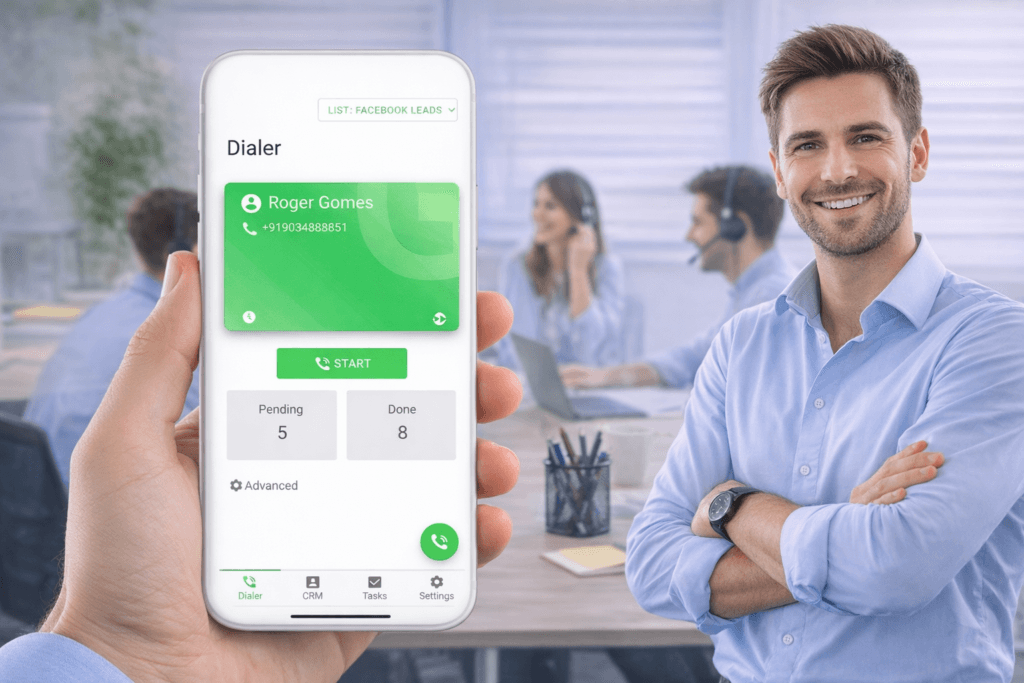
High-performing sales teams don’t push reps to “just call more.” Instead, they fix the system around them.
They focus on:
- Faster dialing with auto/manual options
- Clean lead assignment and ownership
- Built-in calling inside the CRM
- Clear call outcomes and notes
- Real-time dashboards for managers
Tools like GoDial help streamline this entire workflow by combining SIM-based calling, mobile CRM, lead management, and call reporting—without changing how reps naturally work on their phones.
The result isn’t pressure—it’s momentum.
Key Takeaways
- Missed call targets are usually a process problem, not a people problem
- Manual dialing and tool switching quietly kill productivity
- Poor lead organization leads to wasted calls
- Managers need real-time visibility, not end-of-day reports
- Call targets should be data-driven and realistic
- Structured workflows consistently outperform manual tracking
Final Thought
If your sales team isn’t hitting call targets, the solution isn’t longer hours or stricter supervision. It’s removing friction from the calling process and giving teams systems that support speed, clarity, and accountability.
If you’re exploring ways to modernize your sales calling workflow, it may be worth evaluating tools that combine calling, CRM, and reporting into a single experience—so targets become achievable by design, not force.