
For sales teams, the phone system isn’t background infrastructure—it shapes how work actually gets done. It affects how quickly agents can get on calls, how easily managers can see what’s happening, and how painful it is to grow the team.
Traditional PBX systems used to be the obvious choice. Today, cloud-based options have changed that. This comparison looks at Cloud PBX versus Traditional PBX through three lenses that matter most for sales teams: cost, flexibility, and scalability.
What Is a Traditional PBX?
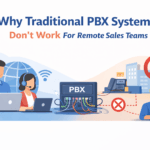
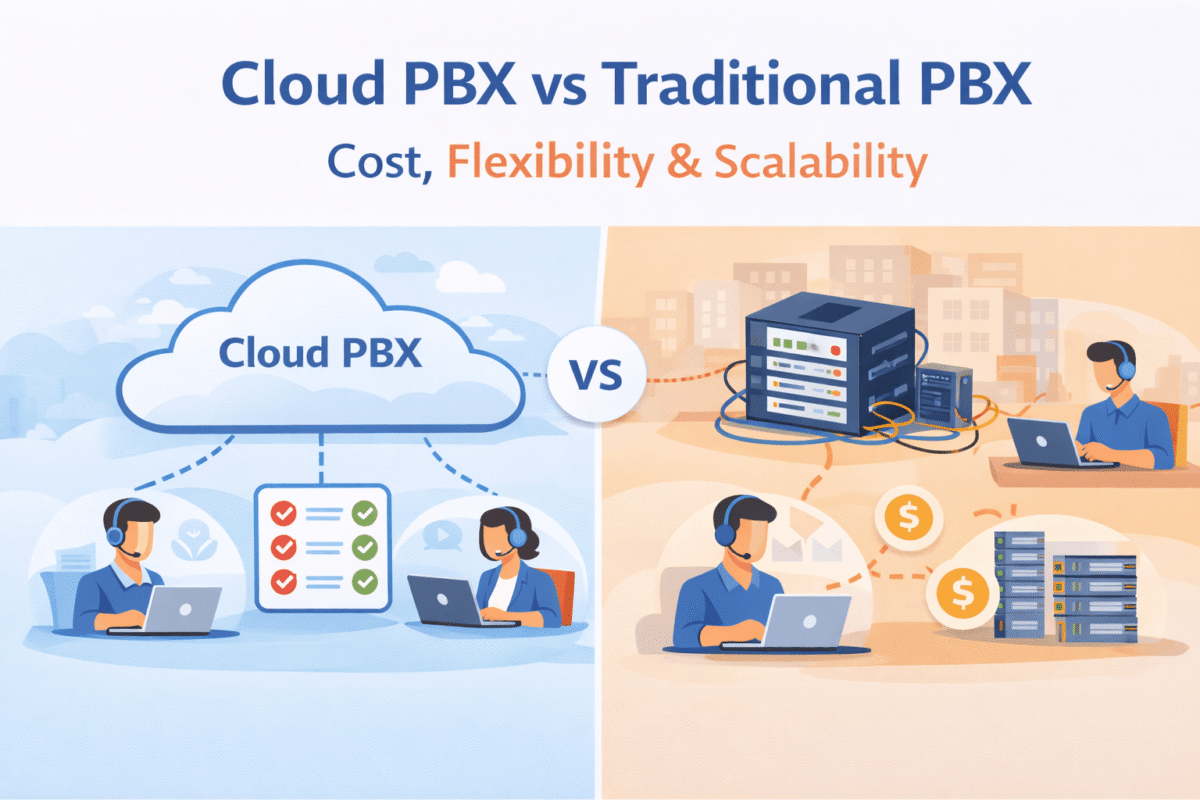
A traditional PBX is an on-premise phone system installed inside an office. Calls run through physical hardware, desk phones, and local wiring. This setup works best when everyone is in the same location, using office phones during fixed hours.
Once teams start working remotely or across locations, those assumptions break down.
What Is a Cloud PBX?
A Cloud PBX is hosted online instead of inside an office. Calls are handled through cloud servers, which lets sales teams make and receive calls from anywhere—using laptops, softphones, or SIP-enabled devices.
There’s no central piece of hardware tying the system to one place.
Cost Comparison
Traditional PBX Costs
Traditional PBX systems usually come with several layers of cost:
- Upfront hardware purchases
- Installation and setup
- Ongoing maintenance and upgrades
- Higher charges for long-distance or international calls
As the team grows or adds new locations, these costs tend to climb quickly.
Cloud PBX Costs
Cloud PBX shifts most of that spending into a simpler model:
- No on-premise hardware
- Subscription-based pricing
- Less maintenance to manage
- More predictable international calling costs
Instead of large upfront investments, costs are spread out and easier to plan for.
Flexibility Comparison
Traditional PBX Limitations
Traditional PBX systems are built around the office. That usually means:
- Access tied to a physical location
- Complicated setups for remote users
- Little support for hybrid teams
To work around these limits, sales teams often end up layering on extra tools.
Cloud PBX Flexibility
With Cloud PBX:
- Agents can work from wherever they are
- New team members can be onboarded quickly
- Remote and hybrid setups are supported by default
This matters a lot for outbound teams working across time zones or shifting schedules.
Scalability Comparison
Scaling with Traditional PBX
Growing a traditional PBX setup often involves:
- Buying more hardware
- Scheduling physical installs
- Dealing with downtime during changes
It’s slow, expensive, and hard to adjust when growth isn’t perfectly predictable.
Scaling with Cloud PBX
Cloud PBX makes scaling much simpler:
- Users can be added or removed as needed
- New regions don’t require new infrastructure
- Campaigns can scale up or down without technical work
Growth becomes an operational decision, not a technical one.
Side-by-Side Comparison
| Feature | Traditional PBX | Cloud PBX |
|---|---|---|
| Deployment | On-premise | Cloud-based |
| Remote Work | Limited | Built-in |
| Scaling | Hardware-dependent | Instant |
| Maintenance | High | Minimal |
| Cost Model | Capital expense | Operating expense |
Which One Is Better for Sales Teams?
Sales teams need systems that can keep up with change. Traditional PBX can still work in a single, office-based setup, but it tends to struggle once teams go remote, expand quickly, or rely heavily on outbound calling.
Cloud PBX fits more naturally into how sales teams work today—distributed, fast-moving, and focused on activity and results.
The choice between Cloud PBX and Traditional PBX really comes down to how your sales team operates. As teams become more distributed and sales cycles move faster, rigid phone systems start to get in the way.
Understanding these differences helps teams avoid locking themselves into infrastructure that slows them down later.