
Sales teams aren’t tied to one office anymore. Remote work, distributed teams, and international coverage are now normal. Yet many businesses still depend on traditional PBX systems built for on-premise offices and desk phones.
That gap creates real problems: rising costs, awkward workflows, and little clarity around what’s actually happening on sales calls. Below, we break down why traditional PBX systems struggle with remote sales teams—and what today’s teams need instead.
The Reality of Remote Sales Teams
Remote sales teams typically work across:
- Multiple locations and time zones
- Different networks, devices, and setups
- Flexible hours rather than fixed shifts
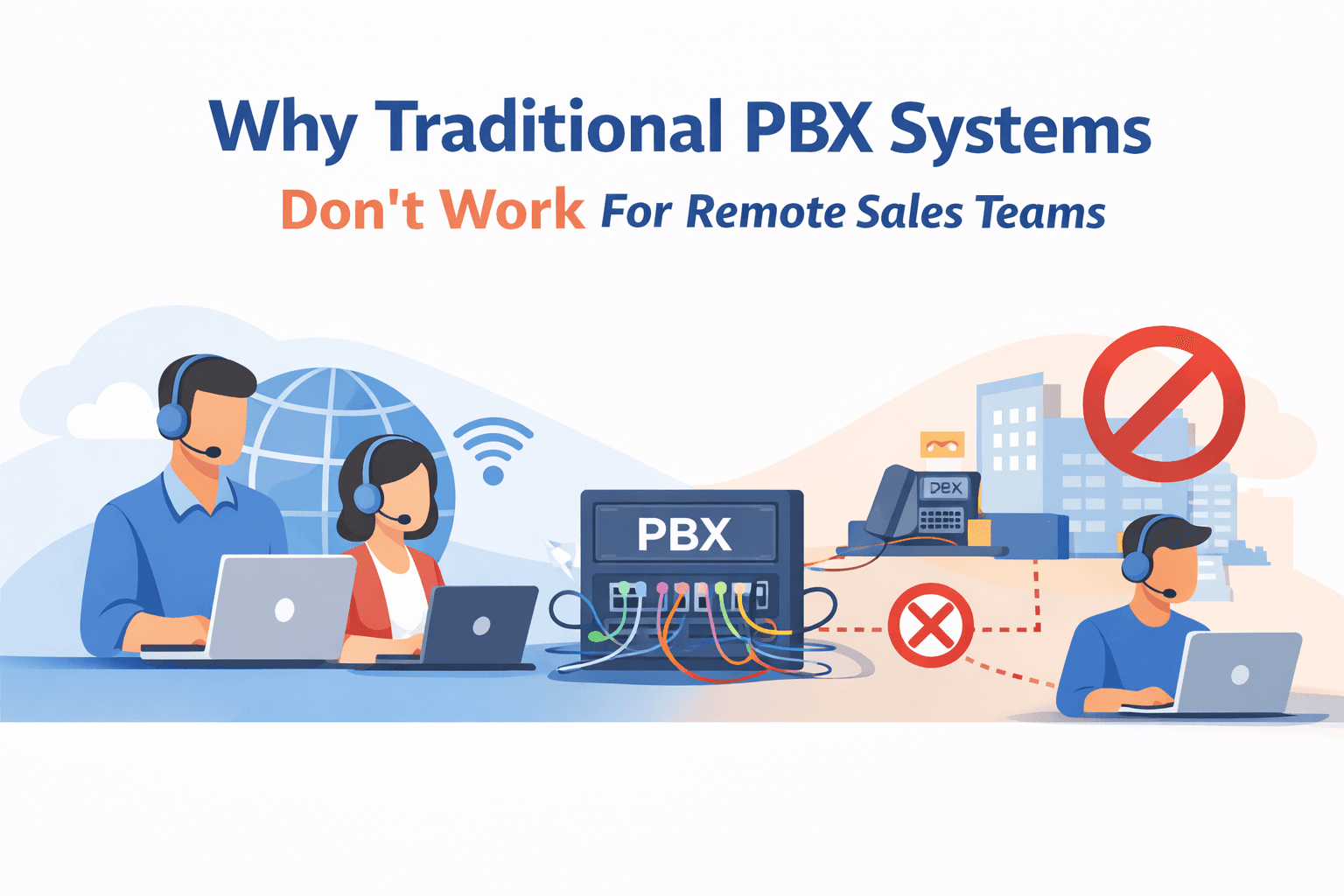
Their calling tools need to work wherever they do. Traditional PBX systems don’t. They were designed around office wiring, fixed phones, and centralized infrastructure—not distributed, cloud-first teams.
Why Traditional PBX Systems Fall Short
1. Hardware Dependency
Traditional PBX systems rely on physical equipment installed in a specific location. For remote teams, that quickly becomes a constraint:
- Agents are tied to office-based systems
- Scaling means buying and installing more hardware
- Updates and maintenance take time and coordination
What once made sense for a single office becomes a liability for a flexible team.
2. Limited Remote Access
Remote access is possible with traditional PBX systems, but it’s rarely straightforward. Common issues include:
- Dependence on VPNs
- Unreliable call quality
- Partial access to call features and history
The result is an inconsistent experience for agents and a less professional one for prospects.
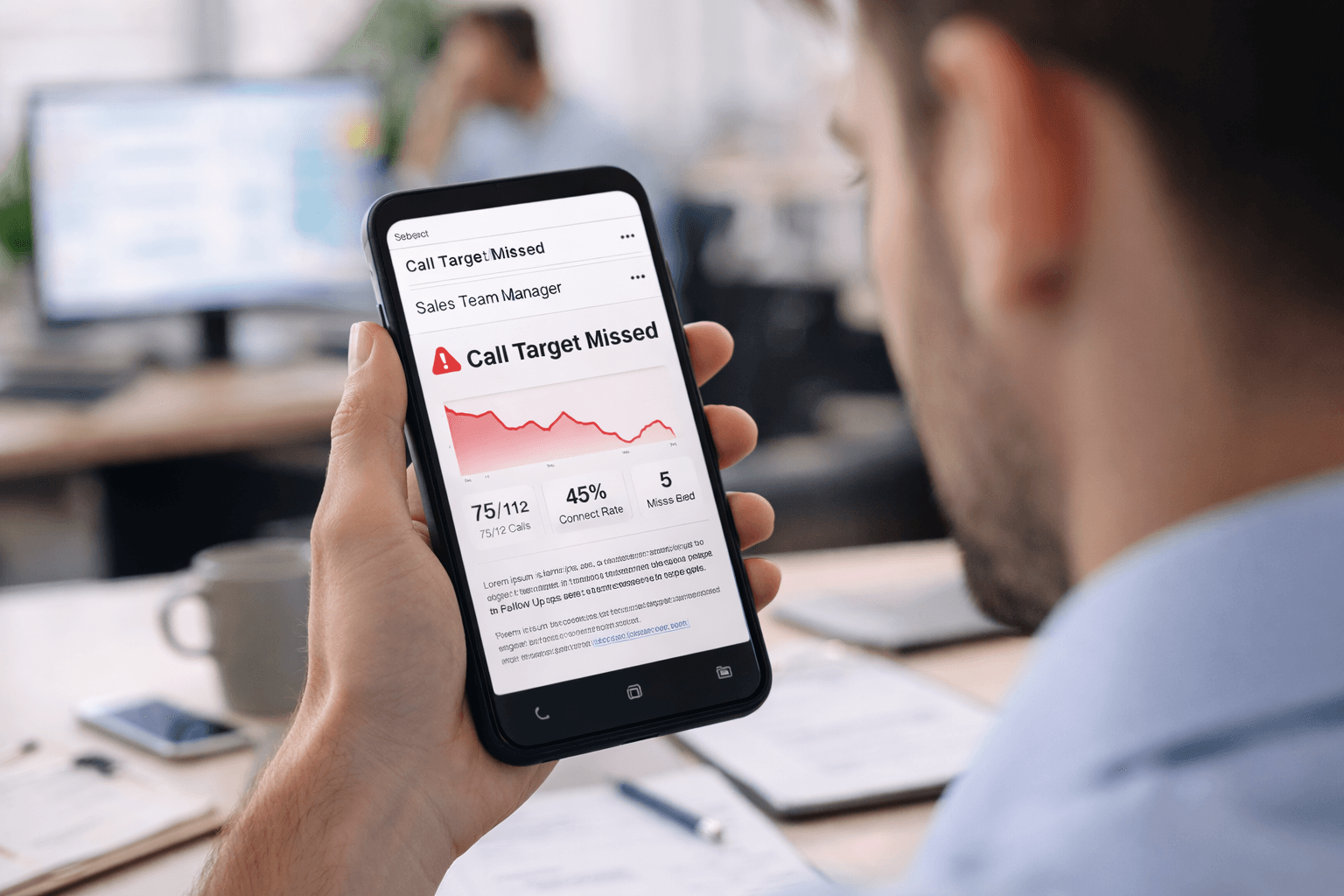
3. Poor Visibility into Sales Activity
Managing a remote sales team requires clear insight into:
- Call volume
- Agent activity
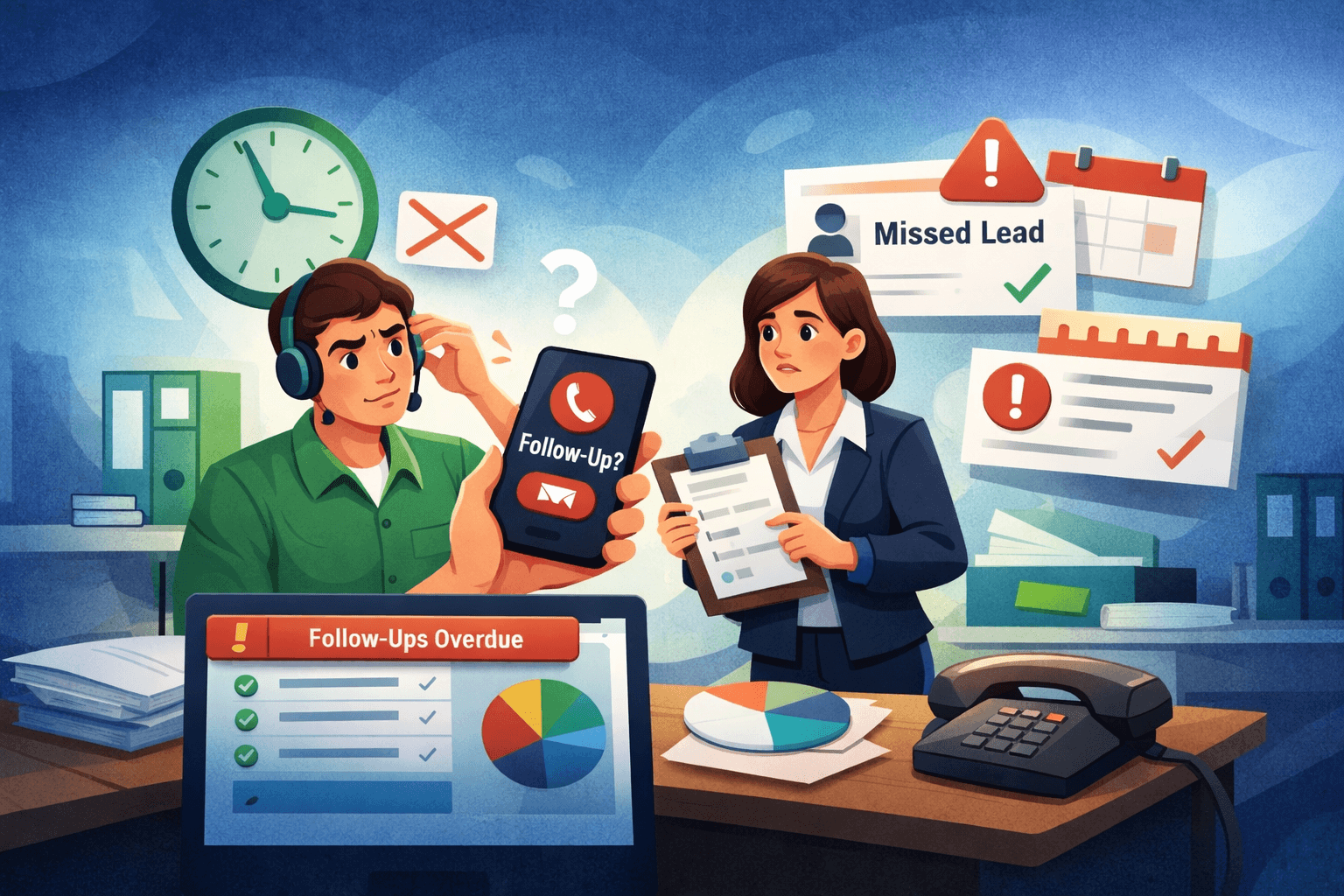
- Outcomes and follow-ups
Most traditional PBX systems weren’t built with sales reporting in mind. Managers often have to pull data from multiple places or rely on manual tracking, which makes it harder to manage performance in real time.
4. High Costs for Scaling and International Calling
As teams grow or expand into new regions, traditional PBX systems become expensive to maintain:
- Long-distance and international calling fees
- Additional hardware for each location
- Separate systems that don’t integrate well
Instead of supporting growth, the phone system adds friction.
Why Workarounds Don’t Fix the Issue
To compensate, many teams turn to:
- Personal mobile phones
- Standalone VoIP apps
- A patchwork of third-party tools
While these options keep calls moving, they introduce new problems:
- No centralized call tracking
- Inconsistent customer experience
- Limited oversight for managers
Over time, this lack of structure makes sales operations harder to manage.
What Remote Sales Teams Actually Need
Remote sales teams need calling systems that are:
- Cloud-based and accessible from anywhere
- Easy to scale without new hardware
- Connected to CRM and lead workflows
- Designed around outbound sales activity
A cloud-based PBX model brings calls, data, and reporting into one place.
A More Practical Approach to Remote Sales Calling
With a modern cloud PBX:
- Agents can work from wherever they’re most effective
- Managers can monitor activity as it happens
- International calling is simpler to manage
- Sales processes stay consistent across teams
The system adapts to the way the team works—not the other way around.
Who This Is For
This approach is a good fit for:
- Remote or hybrid sales teams
- Growing outbound sales operations
- Businesses selling across regions or countries
- Teams ready to move away from rigid, on-premise systems
Traditional PBX systems were built for a different way of working. As sales teams become more distributed, those systems start to show their limits.
Remote sales teams need flexible, cloud-based calling tools that match how sales is actually done today. Understanding where traditional PBX falls short is the first step toward a more scalable and manageable sales setup.